Cobots in Automotive Manufacturing: Safe Human–Robot Collaboration
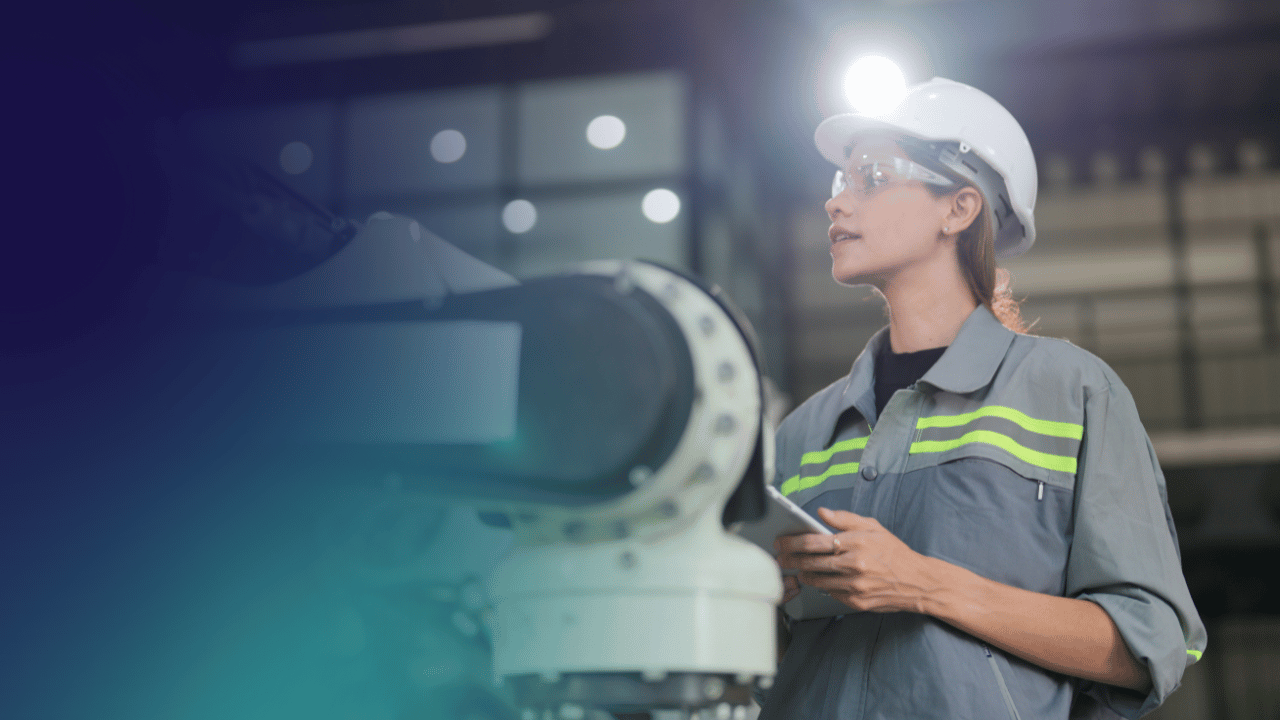
The word robot still triggers the same anxiety in a lot of manufacturing conversations. People immediately think: replacement. Job loss. A factory that runs without humans. But if you’ve actually spent time inside an automotive plant lately, you know the shop-floor story looks different.
What’s happening isn’t usually full replacement.
It’s collaboration. Robots are doing more, yes — but so is the demand for people who can work confidently alongside automation, stay safe around it, and keep production moving when systems don’t behave perfectly.
That’s the real role cobots are playing right now in smart automotive manufacturing.
Cobots Change the Dynamic on the Line
Automotive plants have used industrial robots for decades — welding, painting, heavy lifting, usually behind guarded fencing.
Cobots are built for something else. They’re designed to operate closer to people, supporting tasks that benefit from consistency or ergonomic relief without requiring a full automation cage around them. In most plants, cobots don’t arrive as some dramatic overhaul. They show up quietly at first — one station, one workflow, one small adjustment that reduces strain or improves consistency.
That’s why they matter. They fit the reality most manufacturers are living in: automating step-by-step, without rebuilding the entire plant.
Automation in Automotive Manufacturing Is Still Accelerating
If you want proof that automation investment is continuing, automotive remains one of the clearest signals. The International Federation of Robotics reported that U.S. automakers installed 13,700 industrial robots in 2024, a 10.7% increase year over year.
Automotive installation totals are typically reported with a one-year lag, but the direction is unmistakable: automation in auto manufacturing is still climbing, and plants are becoming more hybrid by design.
Not “lights-out.” Hybrid — shared environments where machines handle repetition and people handle everything that still requires awareness, judgment, and coordination.
What Collaboration Actually Looks Like in Practice
Cobots rarely replace whole jobs. They get inserted into specific moments. A cobot might hold a part steady while a worker fastens it.
It might load a machine so an operator can focus on quality.
It might take over the kind of repetitive handling that wears people down over a long shift. Most of the time, the robot is doing the motion. The human is doing the thinking. The work doesn’t disappear. It evolves.
And the plants that transition well are the ones that understand automation isn’t just a technology upgrade — it’s a work redesign.
Safety Still Depends on Human Awareness
Cobots come with built-in safety features, and that’s part of their appeal.
But the biggest mistake is assuming safety becomes automatic just because the robot is collaborative. In shared workspaces, safety becomes situational. Someone still has to notice when equipment starts drifting outside its normal pattern. Someone still has to speak up when something feels off, instead of pushing through uncertainty.
Cobots work best in plants where they’re treated like coworkers — helpful and predictable, but never something you stop respecting.
Collaboration Comes With Real Growing Pains
Cobots are sometimes described as “easy automation,” but adoption isn’t always instant.
Even collaborative systems bring real early-stage challenges: upfront integration costs, workspace redesign, training gaps when teams aren’t used to working alongside automation, and slowdowns during rollout as workflows get recalibrated. In fact, parts of the robotics market briefly cooled around 2024 before forecasts began pointing strongly upward again — a reminder that adoption happens in waves, not straight lines.
The plants that succeed aren’t the ones that automate the fastest.
They’re the ones that invest in the people and processes that make collaboration sustainable.
Cobots Operate Under Real Safety Standards
Another thing people often miss: cobot adoption isn’t informal.
Collaborative robotics operates under established global safety frameworks, especially ISO/TS 15066, which specifies safety requirements for collaborative industrial robot systems where humans and robots share the same workspace.
The standard reinforces what most plant leaders already know: safe collaboration depends on proper workspace design, controlled force and speed, and thorough risk assessment. Cobots aren’t safe because they’re smaller. They’re safe when the system is designed correctly — and when workers know how to operate confidently inside it.
The Workers Who Thrive Around Automation
As automation expands, the baseline skill set in manufacturing shifts.
Most roles don’t require someone who can program robots. But they do require people who can operate with awareness.
What matters is comfort with systems — noticing when equipment starts drifting, staying calm when alarms hit, and being able to explain clearly what’s happening to the right team. That systems awareness is quickly becoming one of the new basics in automotive work.
If you want a deeper breakdown of the abilities that keep workers valuable in smart plants, you may also like: Top Skills to Stay in Demand in Smart Automotive Factories.
And you can see this shift showing up in labor demand as well.
The U.S. Bureau of Labor Statistics projects employment for industrial machinery mechanics and maintenance workers to grow 13% from 2024 to 2034, much faster than average.
As factories become more automated, the need for people who can maintain, troubleshoot, and adapt grows right alongside it.
Hiring for a Plant That’s Becoming Hybrid
Hiring in the cobot era doesn’t mean you need robotics engineers everywhere. It means you need people who can think beyond the single task in front of them. The strongest workers in hybrid plants are often the ones who ask: “What does this alarm actually mean?” “What happens downstream if we stop here?” “Who owns the reset procedure?”
Cobots don’t just change equipment. They raise expectations.
From the employer side of this conversation, we explore hiring priorities in more detail here: How Automotive Employers Should Hire for Industry 4.0.
What’s Coming Next Is Already Showing Up
Cobots are today’s reality.
But automakers are also testing what comes after cobots: robotics that’s more mobile, more adaptive, and increasingly AI-integrated.
Some of these experiments have moved beyond concept. BMW has already trialed humanoid-style robots in live plant environments, exploring whether robots can support more dexterous, human-space tasks — not just fixed stations behind cages.
Mercedes has also begun investing in next-generation robotics partnerships aimed at assembly and logistics support. And Hyundai’s continued work with Boston Dynamics signals that major manufacturers are preparing for a future where robots don’t just stay in place — they move through the factory alongside people.
This isn’t a sudden replacement story. It’s a slow expansion of collaboration — and it makes human adaptability even more valuable.
Where Staffing Still Makes the Difference
Human–robot collaboration changes job requirements faster than job descriptions can keep up. That’s where staffing becomes strategic.
Not just filling openings — but identifying people who can succeed in hybrid environments: operators who stay systems-aware, technicians who troubleshoot across automation layers, teams that stay safe while processes evolve. Especially during EV transitions and automation upgrades, misalignment is expensive. The right hires don’t just fill roles.
They help the factory evolve.
If your plant is adjusting to Industry 4.0 changes, a staffing partner who understands hybrid manufacturing roles can help you stay ahead.
Looking for opportunities in modern automotive plants and automated warehouse environments?